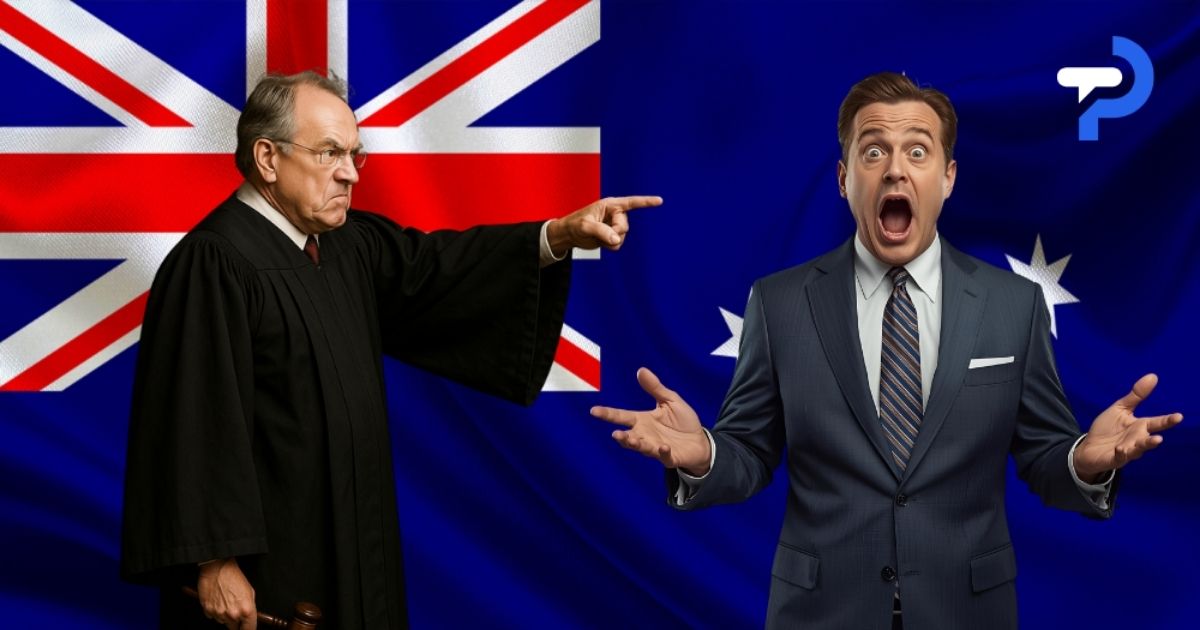
If you're an Australian business with staff in the Philippines, two recent Fair Work Commission decisions have changed the rules — and the difference between them is the most useful lesson in offshore hiring right now.
One business was found liable. The other had the claim against it dismissed. The deciding factor wasn't where the workers sat. It was how they were engaged.
(General information, not legal advice.)
Case one: Pascua v Doessel — the "contractor" that wasn't
Ms Pascua worked remotely from the Philippines for an Australian firm as an "independent contractor." She invoiced her time, was based overseas, and never set foot in Australia.
The Fair Work Commission still found she was an employee — looking past the label to how the relationship actually worked. A decisive factor was that her contract was formed in Australia, which helped bring the arrangement within the Act. Her contract reportedly called her a "contractor" dozens of times. It didn't matter.
She was awarded around $10,800 in unfair dismissal compensation. That figure sounds small — but a misclassification finding opens the door to far bigger exposure.
The real cost: Fair Work penalties
Misclassifying an employee as a contractor can lead to underpayment and sham contracting liability — with civil penalties per breach of up to $99,000 for a company (standard), rising into the millions for serious contraventions by larger businesses. Add back-pay, interest, and the fact that penalties multiply across every affected worker.
These are maximums that courts rarely impose in full — but the exposure is real, and since 2025, intentional underpayment can even be a criminal offence. The risk was never the $10,800. It's everything sitting underneath it.
So is offshore hiring a minefield? Not if it's structured properly — as a second case shows.
Case two: Pe v Pepperstone — why this claim was dismissed
John Harris Pe worked from the Philippines exclusively for an Australian company, Pepperstone. On the surface, much like Pascua. But his Fair Work claim was dismissed.
Why? He wasn't engaged directly on a thin contractor deal. He was employed through a genuine third-party provider that ran its own HR, payroll, performance reviews, and salary sign-off. His contract was formed and performed in the Philippines. A real, substantive employment structure couldn't be recast as a sham.
The takeaway: structure is the protection
- Pascua — direct "contractor" setup, contract formed in Australia → employee; business liable.
- Pepperstone — genuine third-party employer, contract formed in the Philippines → claim dismissed; business protected.
Same country, opposite outcomes. The difference was structure.
The good news: you don't need to build a Philippine entity or run offshore payroll yourself to get this right. That's what an Employer of Record (EOR) does — it legally employs your team in the Philippines, carrying the HR, payroll, and compliance substance, while you keep full control of the work. It's the structure that made the difference in Pepperstone.
Structure isn't the expensive option. The underpayment claim is.
How AOS helps
Australian Outsourcing Services is Australian-owned and Philippine-based — a division of Compliance PH. We build managed offshore teams on a properly structured Employer of Record model, so your team is employed, paid, and protected correctly.
If you already have staff in the Philippines, it's worth checking whether your setup looks more like the first case or the second.
Talk to your Australian-born offshore solution. Contact us to review your structure.
General information only, not legal advice. Outcomes depend on specific facts — consult a qualified Australian employment lawyer for your situation.